
Mental health advocacy often begins with a difficult communication problem: how do you help people understand experiences they may never have encountered themselves?
Statistics can establish scale. Policy language can define responsibility. Personal stories can make an issue recognizable. Digital storytelling brings these forms together through writing, film, audio, photography, social media, and other forms of digital expression.
But a meaningful advocacy story is not simply a private experience placed online. It is a crafted public communication. It has an audience, a point of view, ethical consequences, and a life beyond the person who created it.
As an author and editor who provides coaching on storytelling, Dr. Joshua L. Cohen works with the questions beneath the story: What is this project really trying to say? What might an audience misunderstand? Which details create meaning, and which details only expose the storyteller? How can a story remain human while also communicating a larger concern?
What digital storytelling adds to mental health advocacy
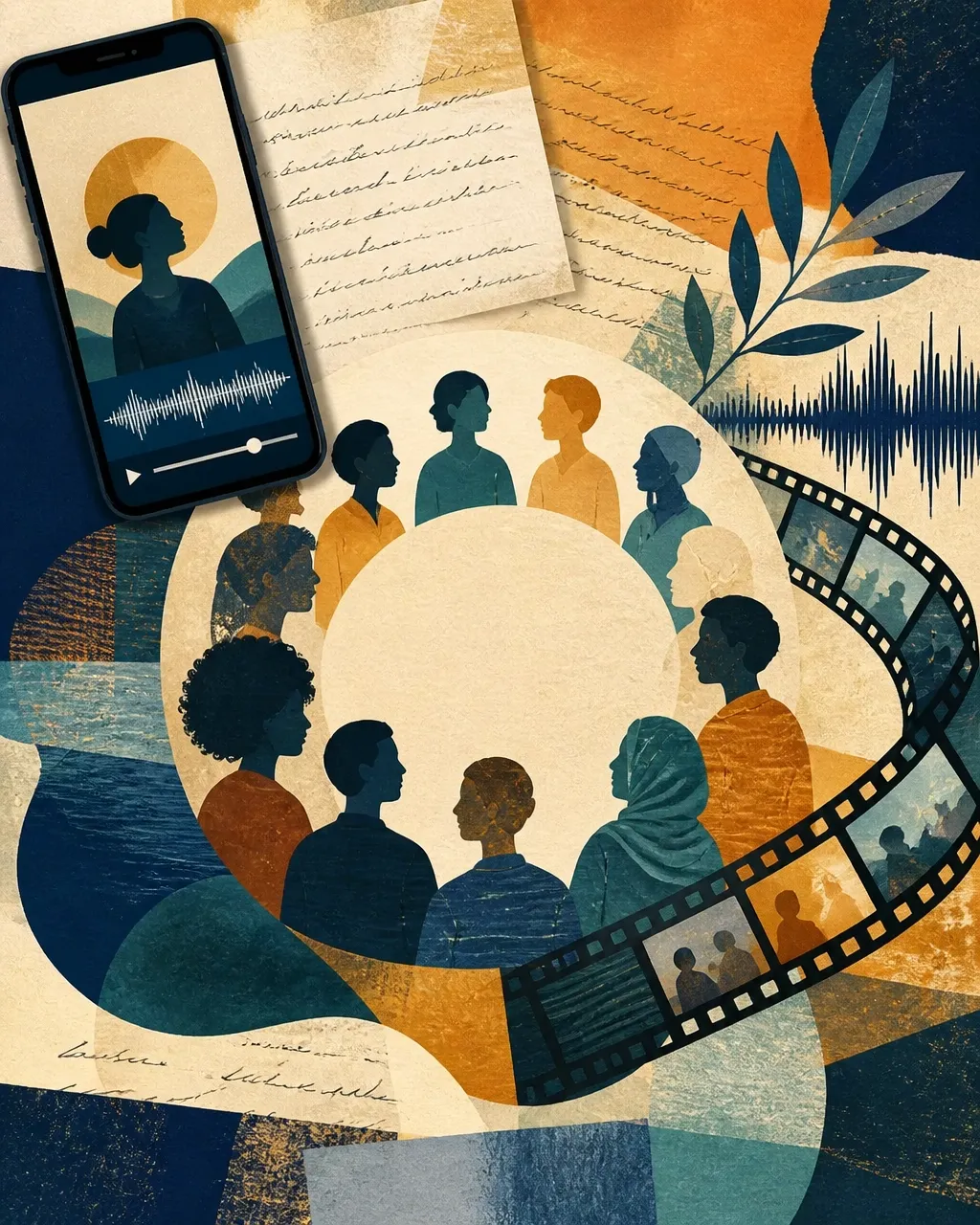
Digital storytelling can take many forms:
- A personal essay about navigating stigma or isolation
- A short film about access, identity, or community
- An audio story that allows a person to control the pace and intimacy of their account
- A social media series that connects individual experiences to public policy
- A collaborative project that represents a community rather than a single viewpoint
- An editorial, campaign, or documentary that invites institutions to reconsider their assumptions
The value of digital storytelling is not that every story will persuade every viewer. Its value is that stories can create room for recognition, questions, and public conversation.
Research has examined digital storytelling in relation to mental health literacy, stigma, participation, and community expression. Findings vary according to the audience, setting, production process, and purpose of the project. A story may influence how people think about an issue, but its effect should not be assumed or guaranteed. The choices surrounding the story matter as much as the format itself.
Resources such as this research article available through the National Library of Medicine's PubMed database, a review of digital storytelling and mental health needs, and the Jed Foundation's guidance for content creators and audiences offer useful starting points.
Why the medium matters
The medium shapes what a story can communicate.
Writing gives the audience time to consider language, sequence, and reflection. Film can bring together image, voice, silence, gesture, setting, and movement. Audio can create intimacy without requiring a person to appear on camera. A social media post may reach a large audience quickly, but it also compresses context and competes with countless other messages.
That means a filmmaker or writer should ask more than, "What happened?"
Other questions may be equally important:
- What does this medium allow the audience to notice?
- What does it leave out?
- Does the form support complexity, or does it force the story into a simple conclusion?
- Are viewers being invited to listen, react, share, donate, vote, or change a policy?
- What context will remain available when the story is separated from its original presentation?
These questions are especially important when a story addresses mental health, disability, discrimination, grief, substance use, caregiving, or other subjects that are often misunderstood. A short video may create immediate emotional recognition, but it may also encourage viewers to believe that one person's experience represents everyone's experience.
The impact of technology on traumatic experiences also deserves careful attention. Digital platforms can preserve testimony, connect people across distance, and make overlooked experiences visible. They can also create permanent records, expose storytellers to unwanted attention, remove context, or circulate emotionally difficult material without meaningful consent. Technology does not determine the meaning of a story by itself. Design, editing, distribution, and audience behavior all influence what happens next.
The possibility of turning experience into public meaning
An advocacy story can hold several layers at once.
At one level, it may describe a person's experience. At another, it may reveal a gap in services, a harmful assumption, or an institutional barrier. It may also create an invitation for the audience to reconsider what they believe, support a specific change, or listen to another perspective.
The challenge is to connect these layers without reducing a person to a representative example.
A storyteller does not have to reveal every detail to make a story meaningful. In fact, the strongest version of a story may depend on what remains private. A carefully chosen detail can carry more meaning than a complete personal history. A fictionalized scene may communicate a truth without exposing someone's identity. A collective project may be more appropriate than asking one individual to carry an entire community's concern.
This is where authorship and editing become acts of responsibility. Developing a story means deciding what belongs in the public version, what requires more context, and what should not be shared at all.
Revising the story without losing the person
Revision is not only a process of correcting grammar or improving pacing. It is an opportunity to examine the relationship between the storyteller, the subject, and the audience.
Dr. Cohen's work as an author and editor who provides coaching on storytelling brings together filmmaking, psychology, storytelling, emerging technology, and post-traumatic growth as areas of inquiry. His role is not to impose a predetermined interpretation on a project. It is to help a creator identify blind spots and opportunities that can be difficult to see from inside the work.
A draft may be sincere and still need revision. An image may be powerful but disconnected from the central question. A voiceover may explain what the scene already communicates. A call to action may be too broad to guide the audience. A story may unintentionally ask one person to disclose more than the project can responsibly hold.
These are creative and ethical questions, not signs that the original experience lacks value.
Whether the project is an essay, documentary, short film, podcast, public campaign, or digital archive, the work of revision can clarify:
- Whose perspective organizes the story
- What the audience is expected to understand
- Where the story needs context or restraint
- How consent and ownership are handled
- Whether the language preserves dignity
- What action, if any, the audience is being asked to consider
The answers will differ from project to project. That is why meaningful coaching begins with the actual work rather than a generic formula.

Ethical sharing is part of the story
Publishing is not the final technical step. It changes the relationship between the creator and the story.
Before a story is shared, creators and collaborators may need to consider whether consent is specific and informed, whether participants understand where the work may appear, and whether they have had a meaningful opportunity to review their representation. They may also need to think about captions, transcripts, image descriptions, translation, moderation, comments, and the possibility that a story will be copied or viewed outside its original context.
Mental health advocacy also requires care with language. A person should not be presented as a diagnosis, a symbol of suffering, or evidence for a conclusion they did not choose. Advocacy can name a problem without treating someone's private life as public property.
The most responsible projects leave space for uncertainty. They do not promise that storytelling will solve an individual or institutional problem. They show what the storyteller knows, what remains unresolved, and why the audience should continue paying attention.

Why work with Dr. Cohen?
Dr. Cohen's current Tell Your Story positioning centers on the development, revision, and sharing of meaningful stories through writing, film, and digital media.
His interdisciplinary background allows him to approach a project from several connected perspectives:
- The craft of narrative structure and editing
- The psychology of audience attention and interpretation
- The ethics of representing personal and community experience
- The communication demands of advocacy
- The changing possibilities of digital platforms, emerging technology, and media
- The relationship between story, identity, and public meaning
His authorship and editorial work, documented through his professional background, informs a coaching approach that is both creative and reflective. The purpose is not to tell filmmakers what their projects must mean. It is to help them ask better questions about what they are making, who it serves, and what responsibilities accompany its release.
Bring your project. Ask better questions. Create with purpose.
A question worth carrying into your next project
The central question may not be, "How can I make this story more powerful?"
It may be:
- What kind of attention does this story deserve?
- What does the audience need in order to understand it?
- What might the project unintentionally reinforce?
- How can the story invite participation without demanding personal disclosure?
- What remains open after the final frame, sentence, or sound?
Those questions do not have universal answers. They become more useful when applied to a specific manuscript, film, campaign, or digital project.
To learn more about Dr. Cohen's work and current storytelling perspective, explore his professional background. If you are developing a project and want to discuss its creative, psychological, or ethical questions, you can contact Dr. Cohen to determine an appropriate next step.
This article is an educational discussion of storytelling and advocacy. It is not diagnosis, treatment, psychotherapy, or crisis support.