
Living Your Dreams: Tell Your Story Through Video Coaching

A dream can feel distant when it stays trapped in your head. Tell Your Story. Live Your Dreams. In this author-led coaching and educational approach, filmmaking can help give a dream, possibility, or imagined future visible form. You can imagine the movie of the life, story, or creative future you want to build—and then begin making it.
Tell Your Story coaching is creative and educational, not psychotherapy, diagnosis, or treatment. At the same time, the creative process can be therapeutic in a broader sense by supporting reflection, meaning-making, perspective, expression, and purposeful action. Dr. Cohen’s three Routledge books, including his 2026 volume on post-traumatic growth and FILM/VIDEO-BASED THERAPY®, provide the scholarly foundation for examining how filmmaking, storytelling, technology, and media psychology may contribute to therapeutic possibilities within appropriate contexts. The medium itself is not the therapist, and video is not treatment.
We can make filmmaking more therapeutic without turning filmmaking into therapy.
That is the heart of Tell Your Story: helping filmmakers, creatives, dreamers, and storytellers develop meaningful work through author-led creative education and Jungian-informed coaching.
To learn more about the Tell Your Story pilot, Join the Community.
From dream to visible form
“Tell Your Story. Live Your Dreams.” is an aspirational frame, not a guarantee. It points to a process: taking something hoped for, imagined, or not yet fully understood and giving it a shape you can see, question, revise, and share.
For a filmmaker, that might begin with a sentence, an image, a location, or a scene that will not leave you alone. A dream can become a shot list, a storyboard, a rough cut, or a better question.
Video coaching creates a place to explore what the project is really asking. What does the dream look like in one moment? Who is in the frame, and who is not? What needs privacy, consent, or more context? If the material touches trauma, illness, identity, disability, or memory, how can it be approached responsibly?
Technology matters here, but it is not the point. Cameras, editing tools, screens, and optional AI-assisted filmmaking tools can help visualize dreams, characters, environments, and possibilities that might otherwise be difficult to create. They can also flatten nuance or invite oversharing if they are used carelessly. Tell Your Story is not an AI filmmaking program. Human stories, judgment, authorship, and creative choices remain central.
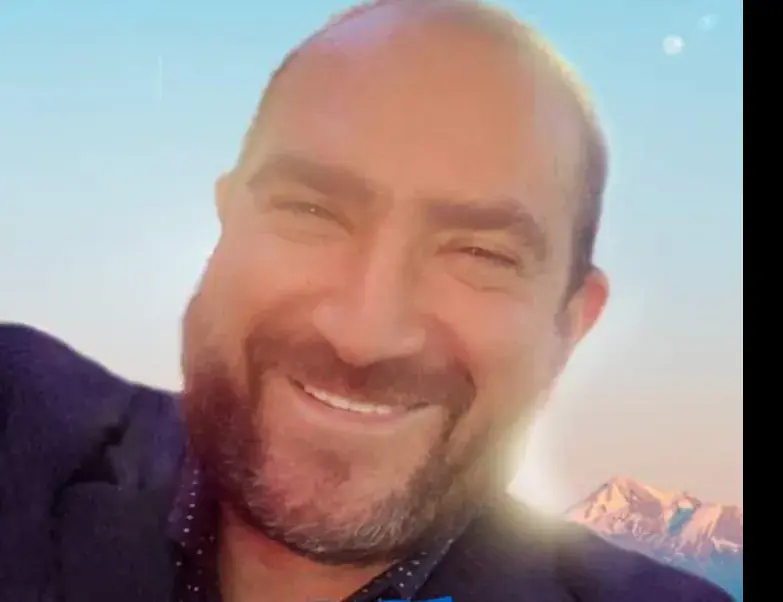
Why work with Dr. Cohen?
Dr. Joshua L. Cohen brings together filmmaking, media psychology, storytelling, emerging technology, and post-traumatic growth scholarship. His three Routledge books form more than a set of edited collections; they document the development of FILM/VIDEO-BASED THERAPY® scholarship and explore the relationship among filmmaking, psychology, storytelling, technology, post-traumatic growth, and media psychology.
That perspective can help when you are too close to your own project to see what it is doing. Sometimes the most useful coaching question is not “How do I finish?” but “What am I really making?” Dr. Cohen’s role is not to impose an interpretation, but to help filmmakers and storytellers identify blind spots, clarify intention, and make more purposeful creative choices.
The Tell Your Story pilot: WATCH → REFLECT → CREATE → SHARE
The Tell Your Story pilot is being developed as an author-led experience for developing, revising, and sharing meaningful stories.
Its proposed structure is:
WATCH , Encounter a story, image, film, or creative example.
REFLECT , Consider what the work raises for you as a filmmaker or storyteller.
CREATE , Bring those questions into your own writing, filming, visual planning, or editing.
SHARE , Decide what to share, with whom, and for what purpose.
This is not a promise of any particular outcome. It is an invitation to explore how a story takes shape and how creative decisions become more intentional.
Singularity Watch, Season 1, Episode 8 — "Media Psychology with Dr. Josh Cohen."
Optional AI-assisted filmmaking tools may be part of that exploration when useful, but they are not the center of the work. Tell Your Story remains focused on human stories, judgment, authorship, and creative choice.
A practical, nonclinical creative exercise
This exercise is for creative planning and reflection.
1. Write the dream
Complete this sentence:
“I am curious about making a story in which…”
2. Choose a visual reference
Select one image, location, object, or composition that fits the sentence.
3. Film 30 seconds
Create one short scene with a phone or camera. Treat it as a draft.
4. Make an edit
Trim it, reorder it, or remove one shot. Notice what changes.
5. Reflect
Write three observations:
- What became clearer when the idea was filmed?
- What became less clear?
- What question would you bring to a coach or collaborator?
The point is not to prove the dream will happen. The point is to give it a visible form.
The original Tell Your Story commercial
Dr. Cohen’s original one-minute Tell Your Story commercial may be referenced as part of this author-led storytelling work. The commercial is being promoted exactly as supplied. This article does not revise, rewrite, reinterpret, or suggest changes to its wording.
The commercial offers a creative invitation. The broader Tell Your Story experience creates room to explore what a filmmaker or storyteller is trying to make and what next question the work is asking.
What video coaching can make possible
Video coaching does not turn aspiration into certainty. It can make the creative process more visible. A storyboard can reveal what is missing. A filmed scene can expose the gap between intention and effect. An edit can change meaning. Reflection can clarify the next step.
Tell Your Story. Live Your Dreams. Not as a guarantee, but as a way of working: imagine the story, give it form, study what it becomes, and keep shaping it with purpose.
Bring your project. Ask better questions. Create with purpose.
This is coaching and education, not psychotherapy, diagnosis, or treatment.
Join the Community
If you are a filmmaker, creative, dreamer, or storyteller with an idea, draft, visual reference, or unfinished question, Tell Your Story may offer an author-led place to keep developing the work.