The Routledge Trilogy: A Decade of Film/Video-Based Therapy in Three Books
DRAFT: AWAITING DR. COHEN’S APPROVAL: DO NOT PUBLISH.
A body of scholarly publishing can reveal more than a list of titles. It can show how a field develops, how questions change, and how an editor brings different perspectives into conversation.
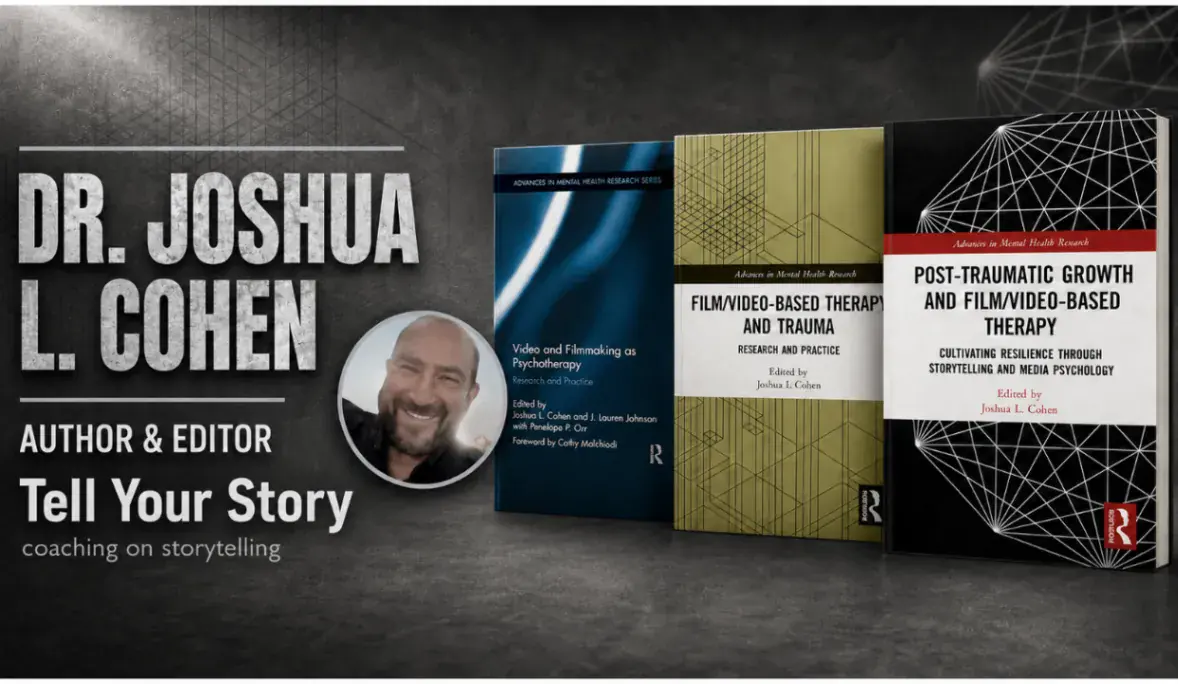
Dr. Joshua L. Cohen’s interdisciplinary work brings together filmmaking, psychology, storytelling, emerging technology, and post-traumatic growth. Across the three Routledge volumes published in 2015, 2023, and 2026, that work documents more than a decade of scholarly inquiry and the evolution of Film/Video-Based Therapy: from an initial multidisciplinary foundation, through trauma and questions of representation and technology, to post-traumatic growth, storytelling, and media psychology.
They are scholarly publications rather than services or programs, and Tell Your Story continues that work as an educational and creative space for people interested in developing, revising, and sharing meaningful stories.
For readers interested in developing, revising, and sharing meaningful stories, Join the Community.
What the Routledge trilogy represents
The trilogy is not a single textbook, a step-by-step system, or a claim that film or video produces a particular psychological result. It is a sequence of edited collections.
Each volume brings together research, professional perspectives, creative questions, and ethical concerns related to film/video-based work. Taken together, the books show a clear intellectual progression: the 2015 volume helped establish the field of inquiry; the second moved more deeply into trauma, ethics, technology, and representation; and the 2026 book expands the work into post-traumatic growth, storytelling, resilience, and media psychology.
The books ask readers to consider what happens when storytelling becomes a site of attention: Who is represented? Who is watching? Who controls the edit? What does technology make visible, and what might it obscure?
Those questions matter to filmmakers, editors, researchers, educators, psychologists, artists, and anyone working with personal or culturally significant stories.
Book One: Establishing a field of inquiry
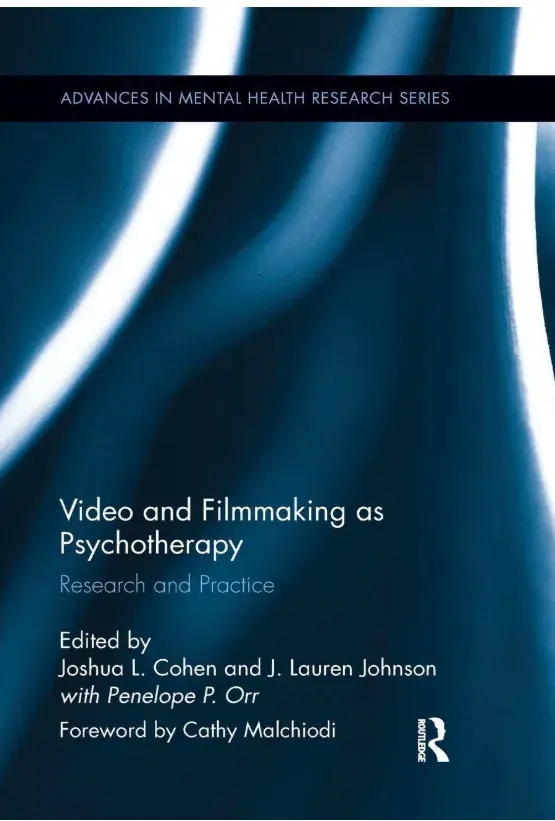
Video and Filmmaking as Psychotherapy: Research and Practice : 2015
Edited by Joshua L. Cohen, J. Lauren Johnson, and Penelope P. Orr, the first volume introduced a multidisciplinary conversation about video and filmmaking within psychological and expressive practices.
The book’s importance is partly editorial. It helped establish the field of inquiry by placing filmmaking and digital storytelling alongside questions from psychology, art therapy, anthropology, psychiatry, ethics, and cultural practice. Rather than treating film as a neutral delivery system, the collection considers how the act of making, shaping, and sharing images can raise questions about relationship, identity, power, and interpretation.
Editing is central to that conversation. An editor does not simply assemble chapters. An editor creates a structure in which distinct voices can be read together without erasing their differences. The resulting book becomes a map of a developing field: and a record of the questions that field is still learning how to ask.
Publisher listing: verify before publication
Book Two: Film, video, and trauma as questions of perspective
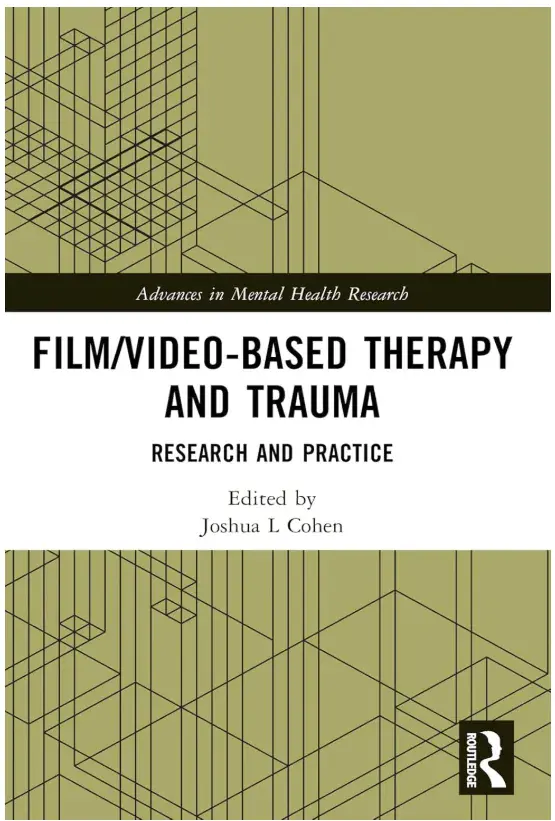
Film/Video-Based Therapy and Trauma: Research and Practice : 2023
Edited by Joshua L. Cohen, the second volume narrows its title toward trauma while expanding the question of context. It moves the inquiry more deeply into trauma, ethics, technology, and representation. Trauma is not presented as a single story or a single category of experience. The book’s subject includes the ways film and video intersect with personal, social, cultural, and historical experiences.
This makes perspective especially important. A camera can document, frame, interrupt, distance, or intensify. An edit can place two images in relation, but it can also create assumptions about sequence, responsibility, or meaning. A story may feel personal while also carrying social and political implications.
The ethical questions therefore remain active:
- Who has the authority to tell a story?
- How are participants represented?
- What does consent mean when a project changes over time?
- How should sensitive material be contextualized?
- What responsibilities belong to the filmmaker, editor, researcher, publisher, or audience?
These are not merely technical questions. They are questions about authorship and accountability.
Publisher listing: verify before publication
THE IMPACT OF TECHNOLOGY ON TRAUMATIC EXPERIENCES
Technology changes how traumatic experiences may be recorded, edited, circulated, archived, and interpreted. That does not make technology inherently beneficial or harmful. It means that every tool introduces choices.
Digital media can alter the distance between an event and its representation. Nonlinear editing can place past and present beside one another. Mobile devices can make recording more accessible while creating new concerns about privacy and permanence. Virtual and emerging media can change the viewer’s relationship to space, embodiment, and point of view.
The central issue is not whether technology guarantees healing, resilience, optimism, transformation, or post-traumatic growth. It does not. The more responsible question is how creators and professionals understand the medium’s influence: and how carefully they approach consent, representation, audience, context, and meaning.
This is where craft and ethics meet.
We can make filmmaking more therapeutic without turning filmmaking into therapy. The medium itself is not the therapist.
Book Three: Storytelling, media psychology, and an expanded vocabulary
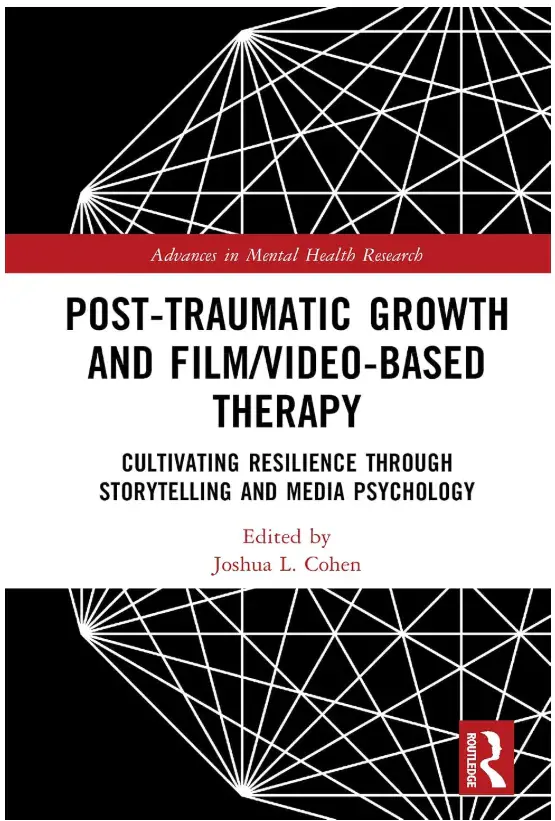
Post-Traumatic Growth and Film/Video-Based Therapy: Cultivating Resilience Through Storytelling and Media Psychology : 2026
The third volume, edited by Joshua L. Cohen, expands the work into a conversation about post-traumatic growth, storytelling, resilience, and media psychology. Its title places post-traumatic growth, resilience, filmmaking, and media psychology in the same scholarly frame.
That title should be read as a statement of subject matter, not a promise of outcome. The book does not make every story optimistic, and it does not suggest that adversity automatically produces meaning or growth. Instead, the title opens a field of inquiry: How do people and communities represent difficult experience? What forms of storytelling make certain meanings possible? How might media shape the way experience is understood, remembered, or shared?
The word “cultivating” also invites scrutiny. What is being cultivated: the story, the conditions for reflection, the language used to describe experience, or the relationship between creator and audience? These distinctions matter because storytelling can be powerful without being simple.
Publisher listing: verify before publication
For readers who want to continue exploring questions of storytelling craft, authorship, and meaning, Join the Community.
Editing as a form of authorship
Across the three books, editing is not invisible labor. It is a form of authorship with its own responsibilities.
An editor establishes a conceptual frame, selects contributions, shapes sequence, clarifies transitions, and creates a relationship among different approaches. In a multidisciplinary collection, that work requires restraint. The goal is not to make every chapter sound the same. It is to create enough structure for disagreement, complexity, and difference to remain legible.
This is also a useful lesson for filmmakers and writers. A project’s meaning does not reside only in its subject. It emerges through selection, order, omission, framing, sound, pacing, language, and audience. The work may begin with an experience, but craft determines how that experience becomes a story.
That is why editing is both technical and interpretive. It asks what belongs, what needs context, what should remain unresolved, and whose perspective has not yet been considered.
Why the trilogy matters to storytellers
The Routledge trilogy offers a scholarly foundation for readers who want to think more carefully about film, video, digital storytelling, and psychological meaning. It also demonstrates how a field can develop through collaboration.
As an author and editor, Dr. Cohen helps identify the blind spots and opportunities that can be difficult to see from inside a project. An outside perspective can reveal where a story is overexplaining, where an ethical question has been left unexamined, or where a formal choice carries more meaning than the creator intended.
The point is not to provide a universal formula. It is to make better questions available.
Bring your project. Ask better questions. Create with purpose.
More Than a Decade of Inquiry—and What Comes Next
The three books move from establishing a field, to examining trauma and context, to expanding the conversation around storytelling and media psychology. Their continuity lies less in a single conclusion than in a commitment to inquiry.
What does it mean to make a story with or about another person? How does technology shape attention and interpretation? What responsibilities accompany the ability to record and distribute? How can filmmakers remain open to complexity without losing clarity or craft?
Those questions remain relevant whether the project is a scholarly book, documentary, short film, digital story, video essay, archive, or emerging-media work.
Tell Your Story is a natural continuation for readers interested in developing, revising, and sharing meaningful stories. It offers an author-led educational and creative space to continue conversations about perspective, structure, editing, ethics, representation, and meaning.
Publisher links are included as source references and should be verified before publication.
The three scholarly books, Tell Your Story, and Dr. Cohen’s coaching, editing, educational, technology advocacy, and community work are scholarly, educational, creative, and consultative in nature. They are not psychotherapy, diagnosis, treatment, crisis intervention, legal advice, or substitutes for services from an appropriately licensed professional.